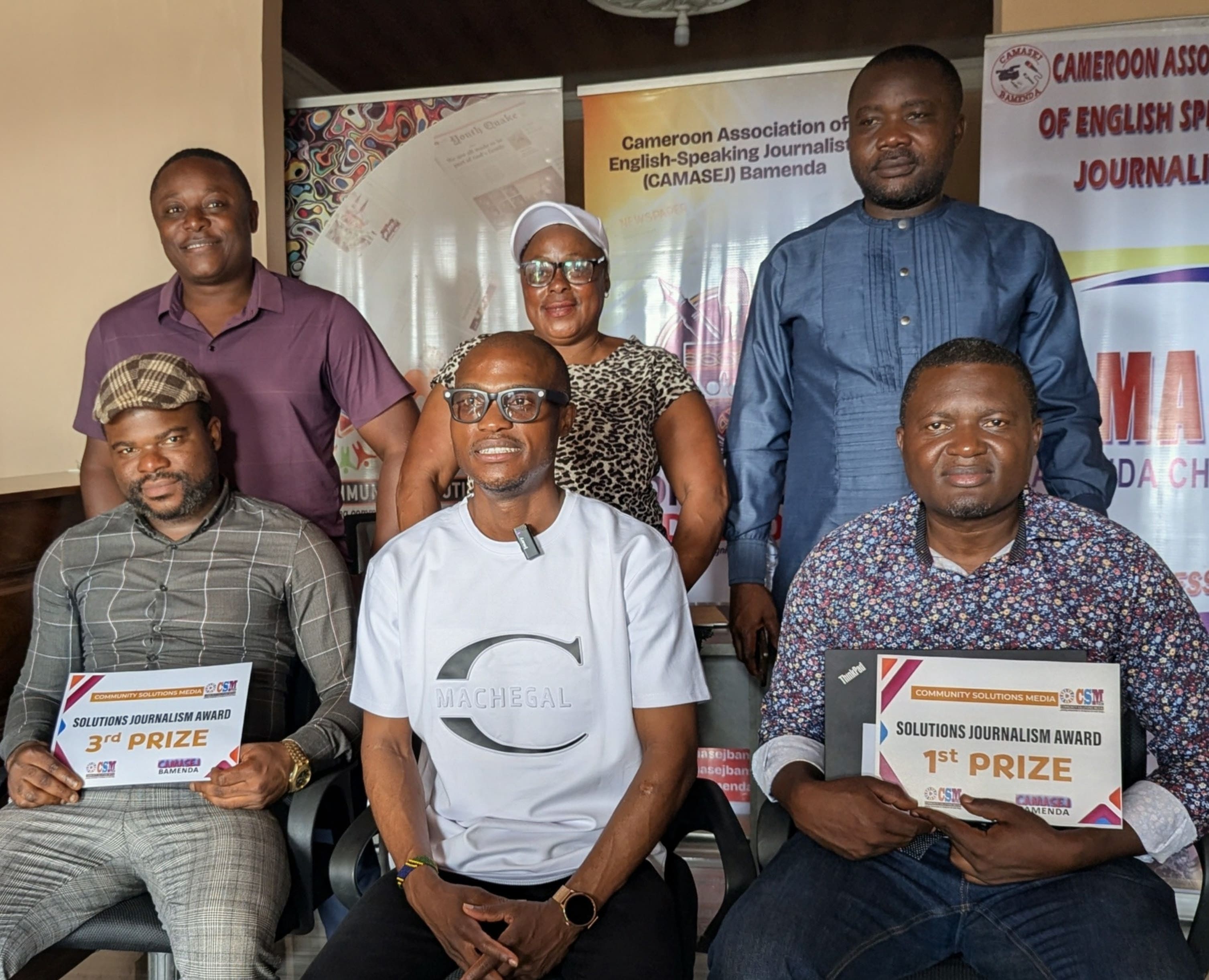
Three Journalists. One Laptop. One Nation's First
May 7th 2026 saw a ceremony at Up Station, Bamenda, which marked a milestone no one had seen before in Cameroon. the first-ever awards recognizing journalists for the stories that offer hope, not just headlines.
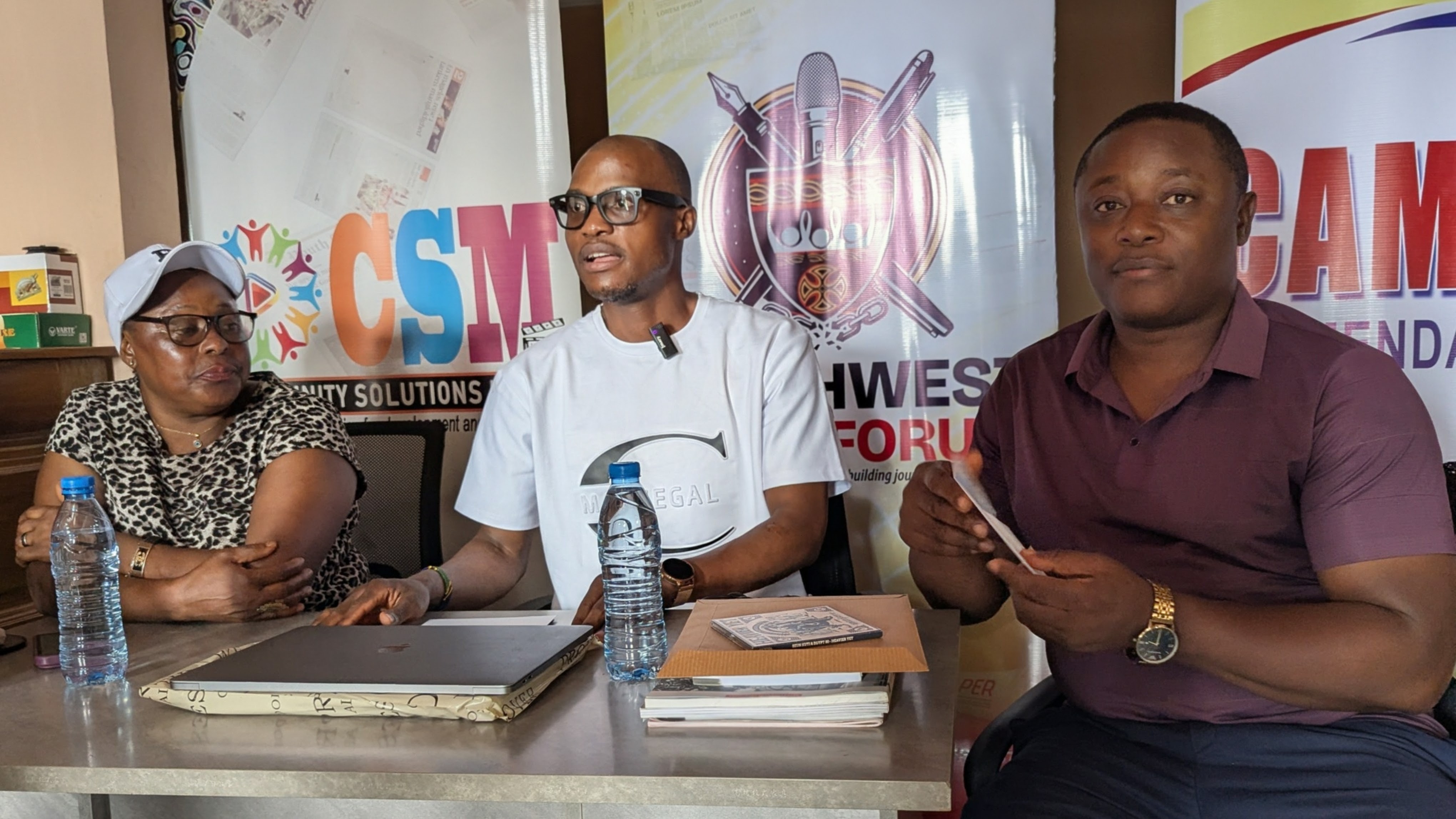
The Northwest and Southwest regions of Cameroon have been living inside a storm for nearly a decade. Armed conflict. Displacement. Kidnappings. School closures. And every day, journalists have been there recording the grief, broadcasting the chaos, bearing witness to a society trying to hold itself together. But this Thursday, in Bamenda, three of those journalists were recognized not for the darkness they covered, but for the light they found within it.
The occasion was the prize-giving ceremony of the inaugural Community Solutions Media (CSM) Awards .the first awards of this kind in Cameroon, honouring journalists who practice what is known as solutions journalism. It was a moment that felt, to those who attended, less like a ceremony and more like a manifesto.
What Is a Solutions Story?
The man behind the awards, Sah Terence founder and executive director of Community Solutions Media, and chapter president of CAMASEJ Bamenda sat down before the press to explain what separates solutions journalism from the rolling tide of conflict reporting.
The Northwest and Southwest have been at the centre of an armed conflict for nearly ten years. The images are familiar: deaths, displacement, fear. But Sah Terence asks a different question. Instead of focusing only on the bloodshed, he says, what if journalists also documented how people are surviving it? How communities are building coping strategies, systems of resilience, small solutions that might be replicated elsewhere?
"It is a way of giving hope to people," he said, "and it is also a way of protecting people in the community.
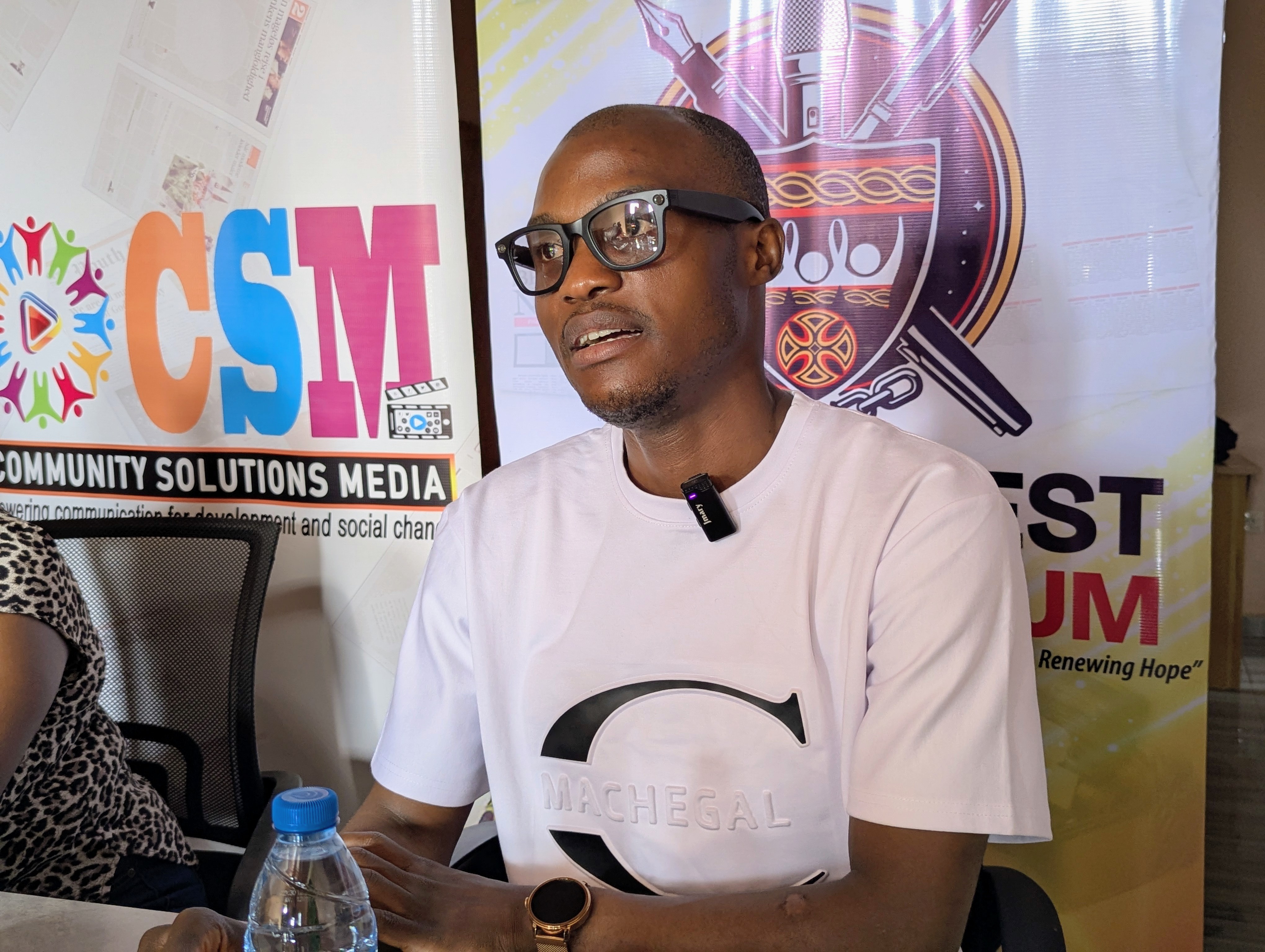
He was careful, however, to draw a line. Solutions journalism is not optimism for its own sake. A story only qualifies if the solution it describes has demonstrated real, measurable impact and if it is scalable, transferable, something other communities facing similar struggles could learn from and adopt.
"It is not just because a problem has been solved that it becomes solutions-worthy journalism," he said. "We can talk about the impact, the limitations, and the insights discoveries that other people can learn from."
In a region where rampant kidnappings and daily insecurity have become routine news fodder, he argued, the more urgent question is: who is finding a way through?
The Winners
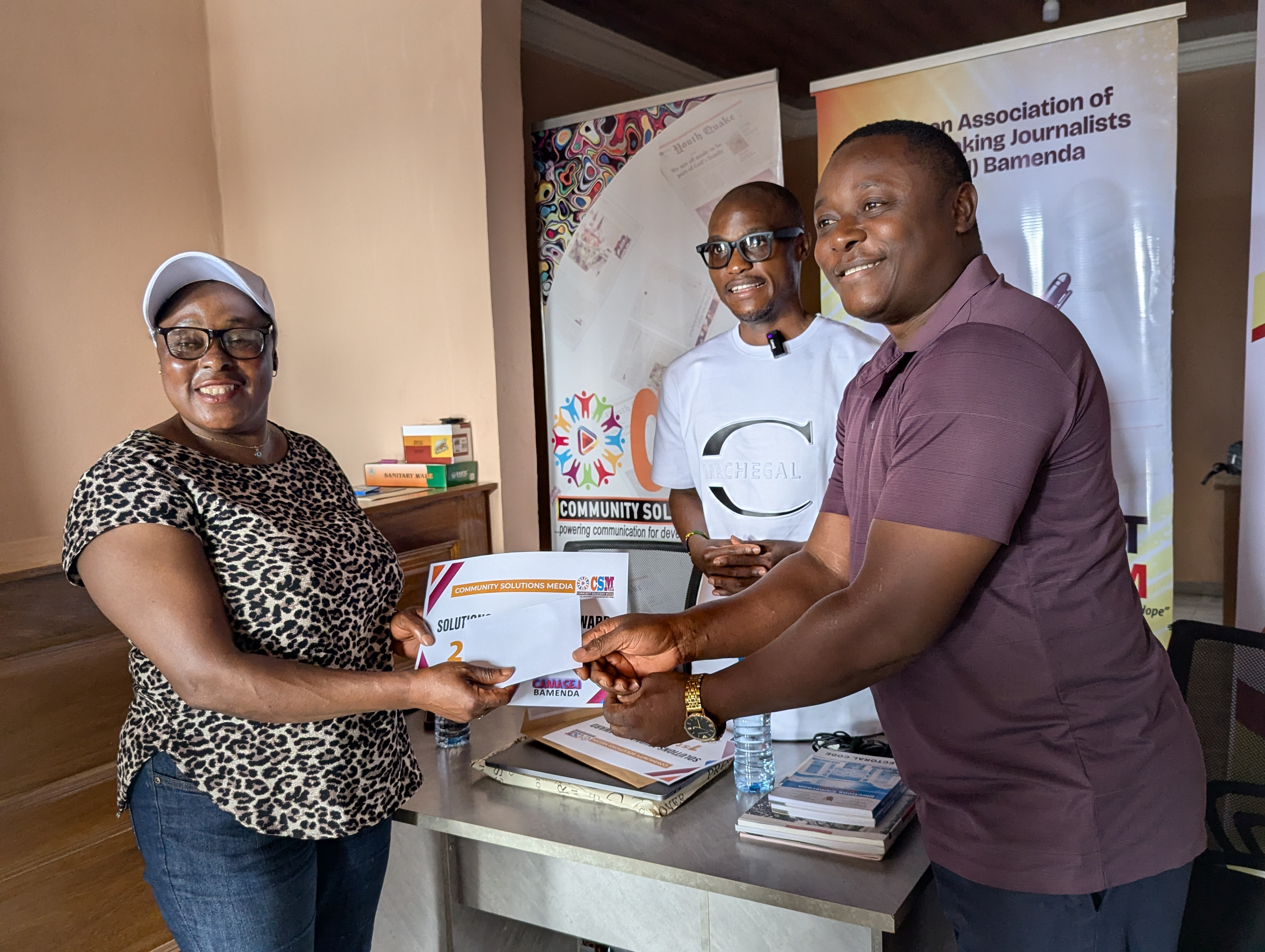
The three prizes were handed out by CSM at Up Station, Bamenda, on Thursday:
1st Place — Wifah Jennyhans: Laptop + 50,000 FCFA
2nd Place — Mbuh Stella: 50,000 FCFA
3rd Place — Tasi Peter: 30,000 FCFA
The Story That Won
Wifah Jennyhans, who claimed first place, wrote about a world he knows intimately the world of persons with disabilities navigating Cameroon's education system. His winning story centered on Circle of Friends, an initiative built over more than fifteen years by a Bamenda-based organisation working to include young learners with disabilities within mainstream campus life.
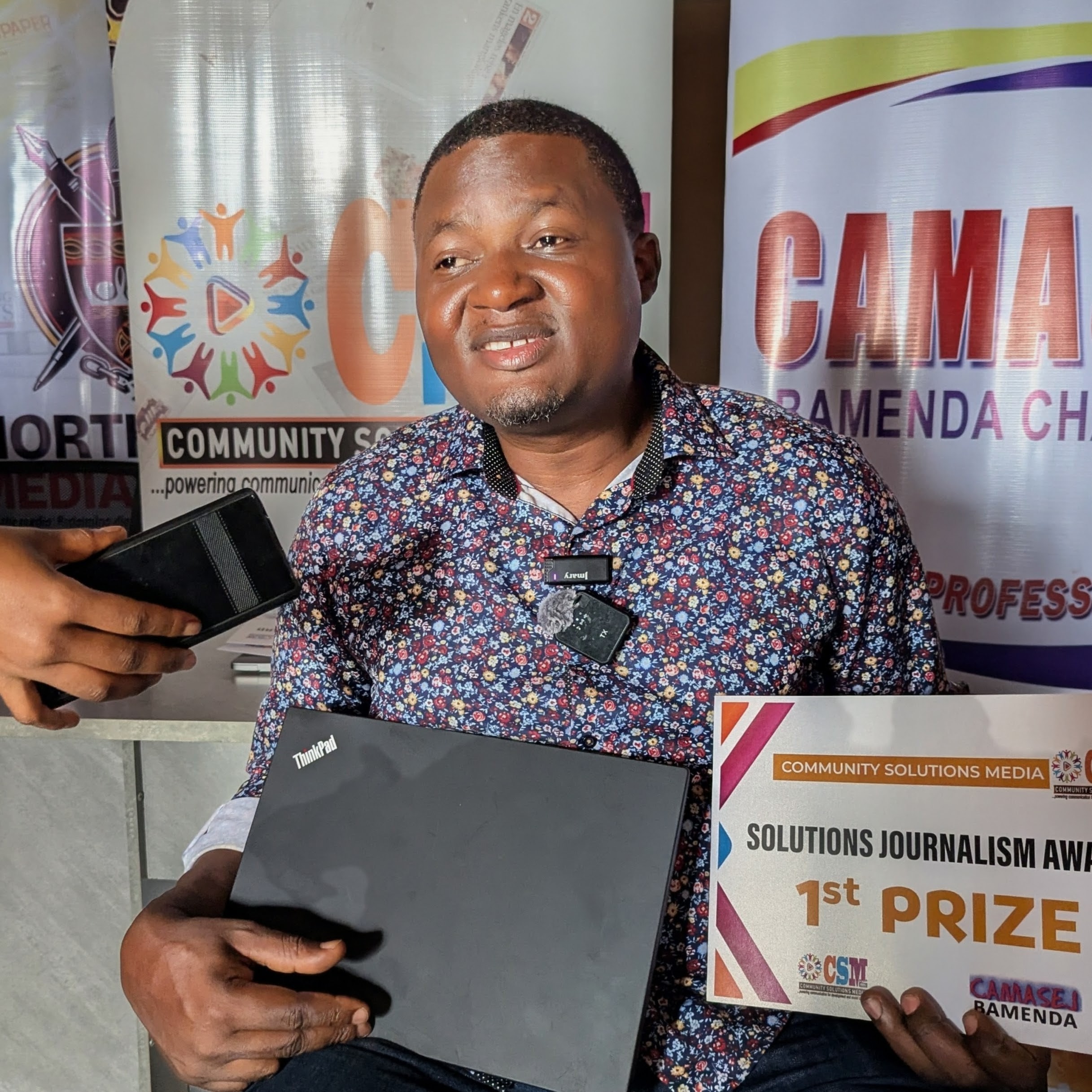
He described how the story came to him not through a tip or a press release, but through introspection looking inward at the quiet, unglamorous work happening around him.
Back in 2013, the organisation had fought to carve out a place on campus for learners with disabilities a battle against stigma, inaccessible infrastructure, and simple indifference. The solution that emerged was a peer-support network: a circle of friends who would walk alongside these students, boost their morale, and gradually shift the community's perception of disability. The impact rippled outward. Today, the Northwest Region is home to a Regional Inclusive Centre a milestone Wifah traces to that early campaign and the community consciousness it helped build.
"The story might not have had all the breaking storytelling impact we journalists want to look out for," he said quietly after receiving his award. "But the community impact the story carries is deep."
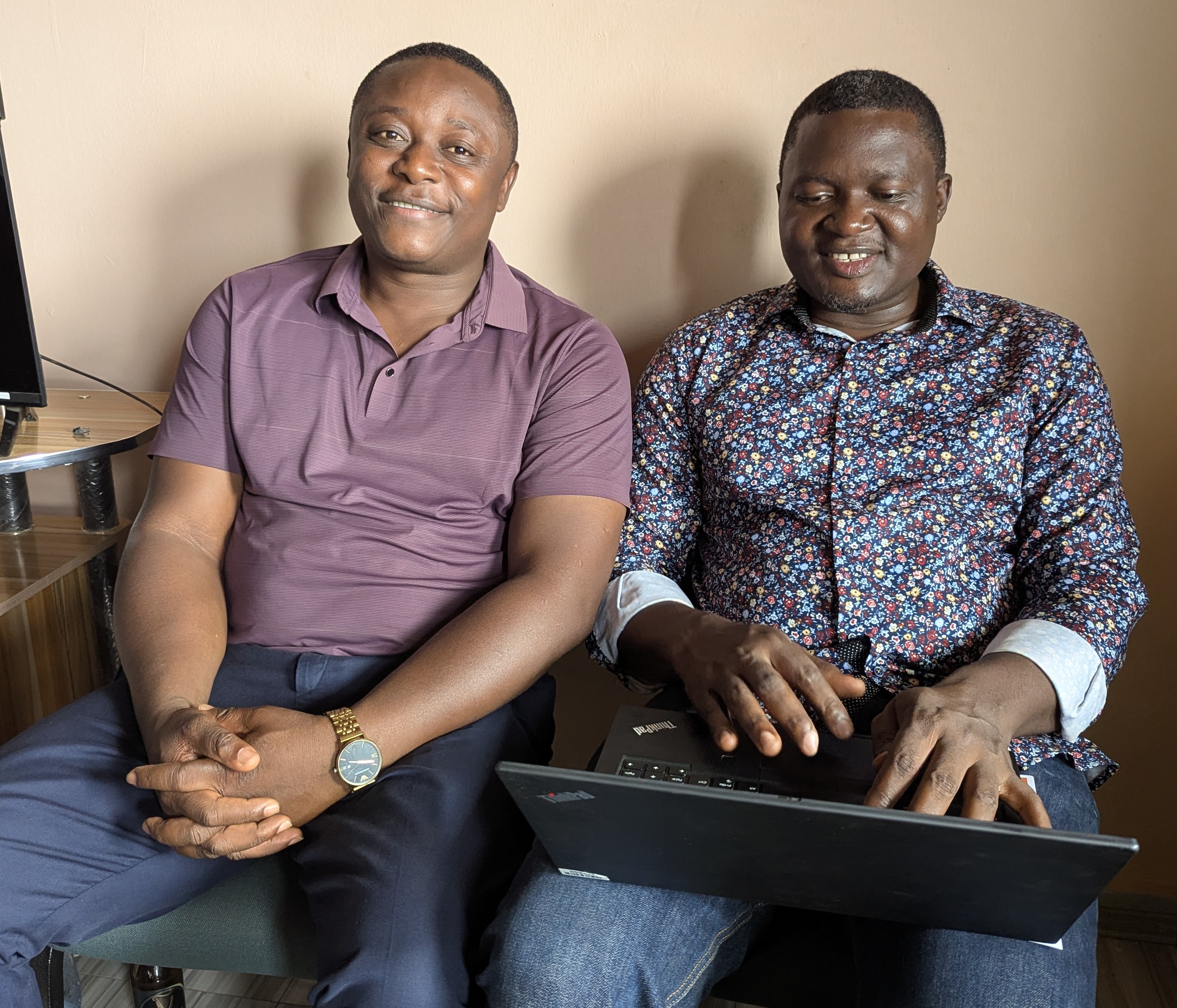
He left the ceremony not just elated, but challenged. "I am more than excited," he said, "but also challenged to continue to do journalism that can influence community and drive social change."
The Third-Place Voice
Tasi Peter, a journalist with Municipal Updates who received the third-place prize, spoke with the conviction of someone who has found a new lens through which to see his profession. Solutions journalism, he said, demands more of a reporter more depth, more patience, more willingness to go beyond what easily presents itself on the surface of events.
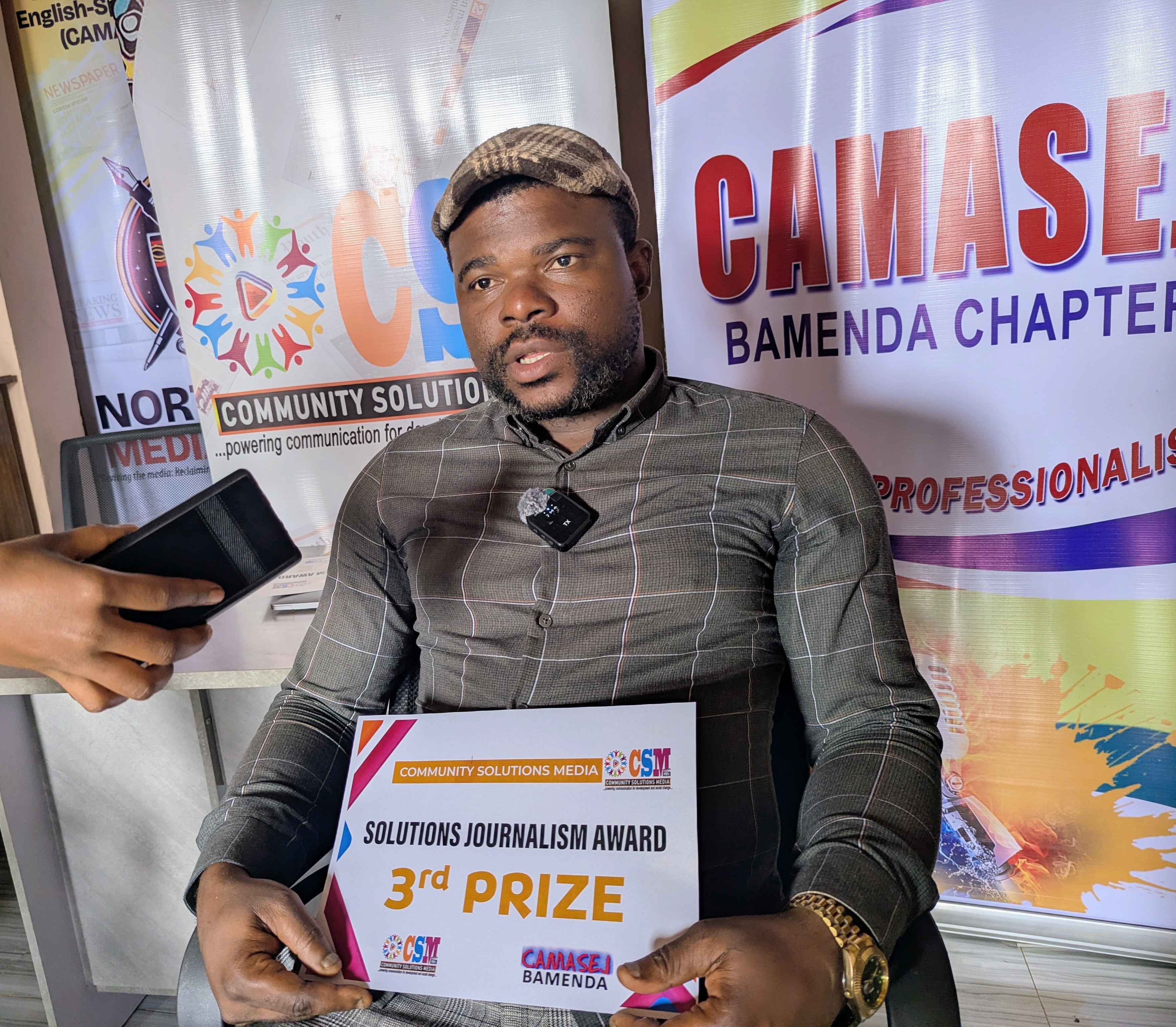
"There are so many stories in communities which are under-reported and which at least need to be brought to light," he told those gathered. "Through solutions journalism, you can actually tell the stories that matter much more to the communities."
Symbolic, But Not Small
Sah Terence was the first to acknowledge the modest scale of the prizes. In a profession where journalists in the Northwest often work without basic social security, without guaranteed safety, and sometimes without a steady salary, a cash award cannot begin to compensate for what is asked of them. He knew that. He said it plainly.
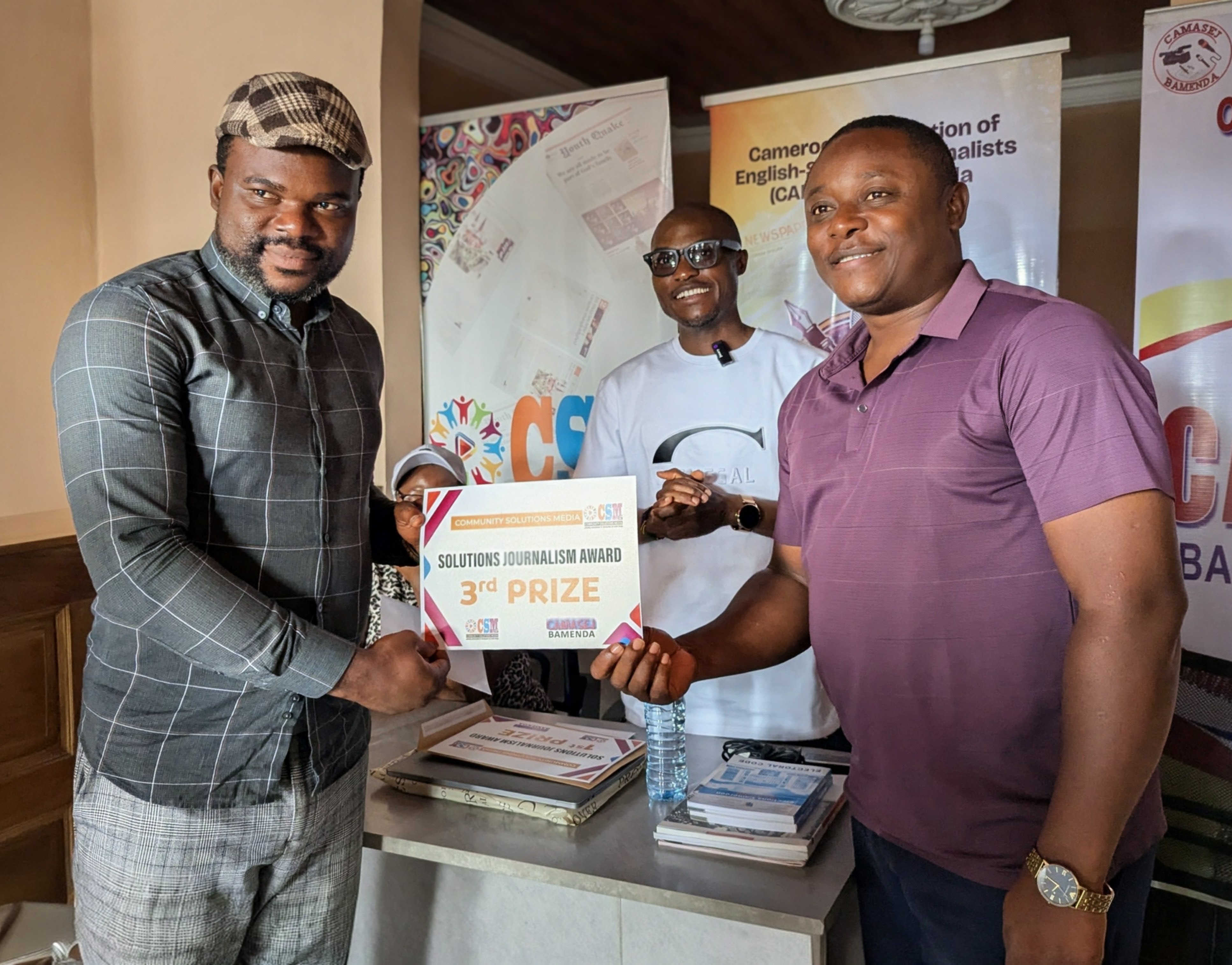
"We cannot really pay these journalists for the amazing work that they do," he admitted. "But this is symbolic. This is very symbolic to us."
The symbolism, though, carries weight. In a country where journalism awards have typically recognised breaking news and investigative scoops, recognising a reporter for writing about a peer-support network for students with disabilities that is a statement about what journalism is for.
The North West Media Forum, from which these awards were born, was itself a gathering of journalists reflecting on their own fragility their working conditions, their rights, their safety inside a conflict zone. The forum ran from 15th-16th January 2026 under the theme "Reviving the Media: Reclaiming Dignity, Rebuilding Journalism, Renewing Hope." It is fitting that the award which emerged from that conversation should honour not just what journalists report, but how they choose to see the world they are reporting on.
The CSM Award Ceremony was organised by Community Solutions Media in partnership with CAMASEJ Bamenda Chapter.
By Bamenjo Petronilla
+237 671870116