
Behind Bars for Birds
In a landmark operation on December 18th 2025 to combat wildlife crime, three suspects including a Ghanaian national were apprehended in Bertoua for their involvement in the illegal trafficking of African grey parrots. The arrests were made during a raid spearheaded by the East Regional Delegation of Forestry and Wildlife, with crucial support from the Last Great Ape Organisation (LAGA).
The traffickers were caught red-handed with 60 African grey parrots concealed in the trunk of a government service vehicle, a black Prado that reportedly belongs to a local Divisional Officer (DO). This troubling use of governmental resources exemplified how perpetrators sought to exploit official status to mask their illicit activities.

A Family Affair in Wildlife Crime
Among the arrested was the brother of the DO, raising serious questions about the involvement of public officials in wildlife trafficking. Eyewitnesses close to the investigation disclosed that the group frequently employed such vehicles to avoid detection while transporting illegally captured wildlife from Messok in the Upper Nyong Division to the capital city of Bertoua.
The captured parrots, which were reportedly quarantined in a small village approximately 25 km from Messok, were intended for sale in local and international black markets. Sources indicate that the traffickers belong to a sophisticated wildlife crime syndicate, with clearly defined roles for each member. The Ghanaian linchpin, connected to prominent parrot traffickers, was responsible for capturing and caring for the birds, while his accomplices managed transport and customer outreach.
The Remarkable African Grey Parrot
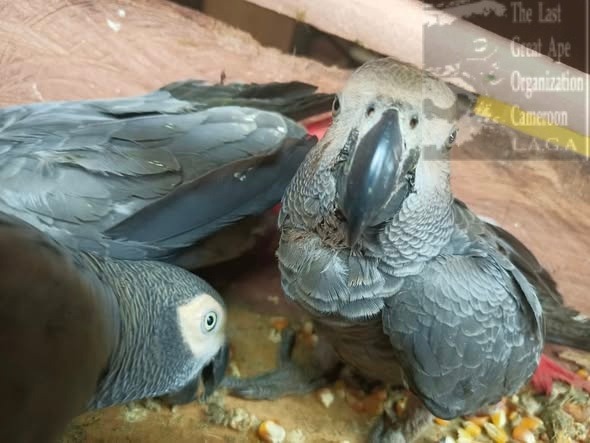
The African grey parrot, native to regions including Cameroon, Gabon, Equatorial Guinea, and parts of Ghana and Uganda, is known for its striking grey feathers, black bill, and renowned intelligence. These birds can mimic human speech and various sounds, making them one of the most coveted species in the illegal bird trade. As of 2016, the African grey parrot is classified under Appendix I of the Convention on International Trade in Endangered Species (CITES), providing it with the highest level of protection against international trade.
Legal Consequences Loom
According to the 2024 wildlife law, if convicted, the three suspects face severe penalties, including up to 20 years in prison and fines reaching 50 million FCFA for their roles in this egregious crime against nature.
The successful operation not only highlights the urgent need for continued vigilance in protecting endangered species but also serves as a stark reminder that the fight against wildlife trafficking requires the collective efforts of law enforcement, governmental agencies, and international organizations.
As the case unfolds, wildlife advocates and governments alike stand united in their quest to protect these magnificent birds and uphold the laws designed to prevent their exploitation.
By Bamenjo Petronilla
+237 671870116