Shovels, Rakes, and Hope: How 85 Community Committees Are to Keep North West's Lifeline Road Constantly Usable
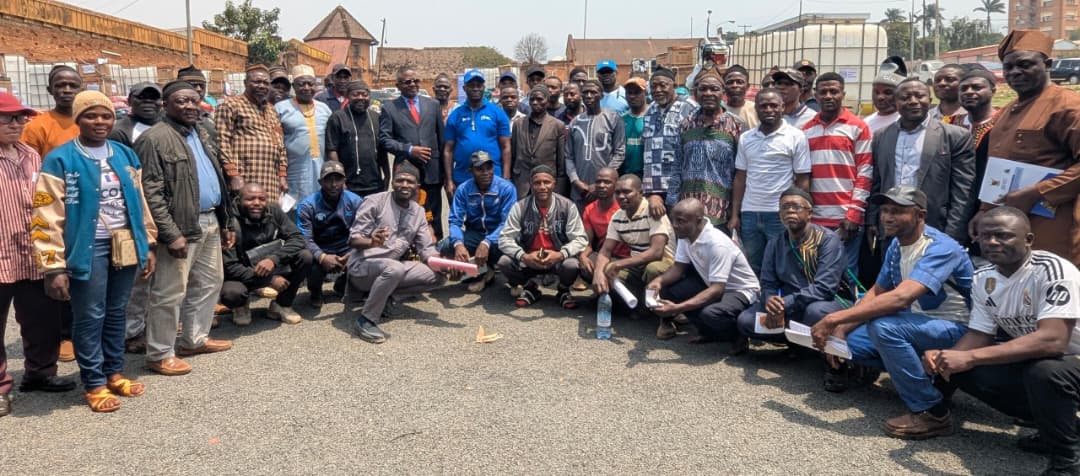
On Thursday 26th February 2026 at Mezam SDO's Esplanade Eighty-five community groups made up mostly of young men and women from 17 councils along one of Cameroon's most important roads received tools to help fix and maintain their own roads.
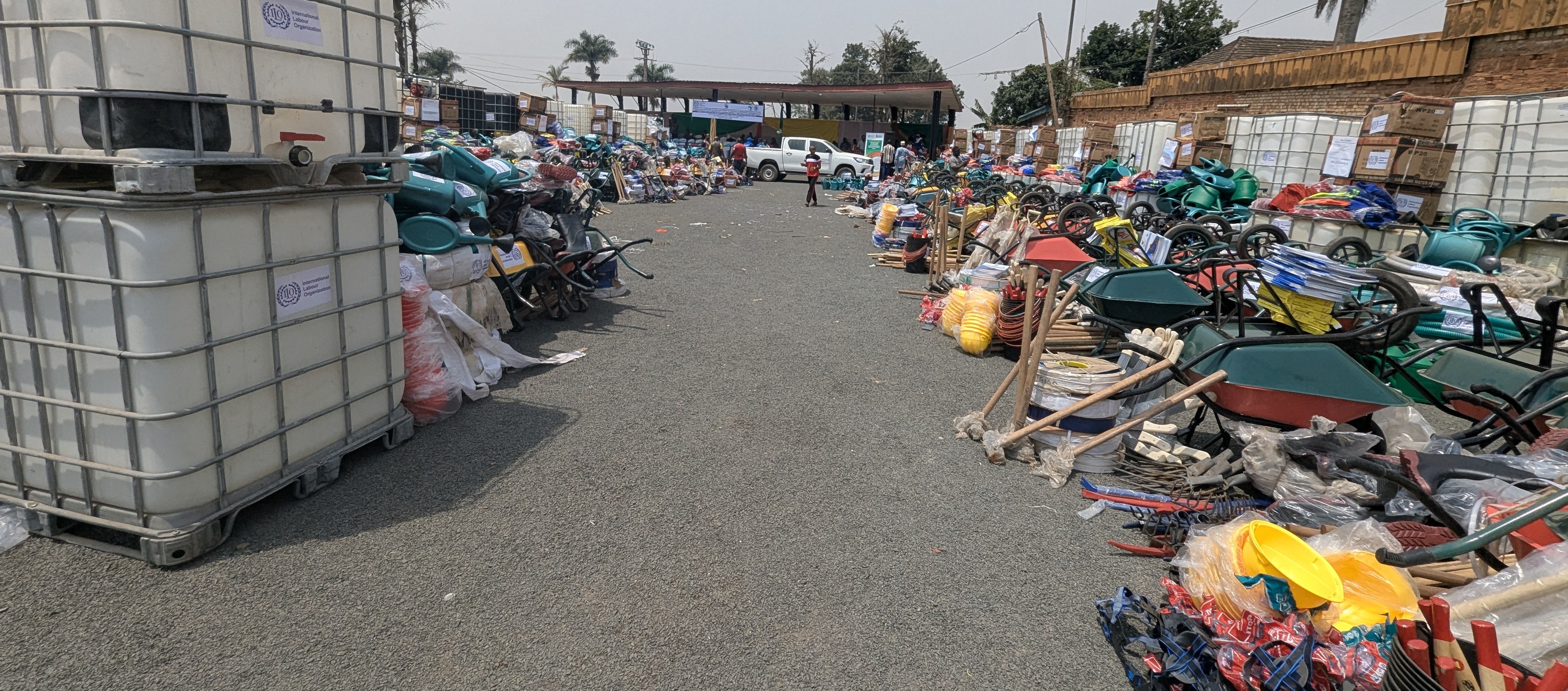
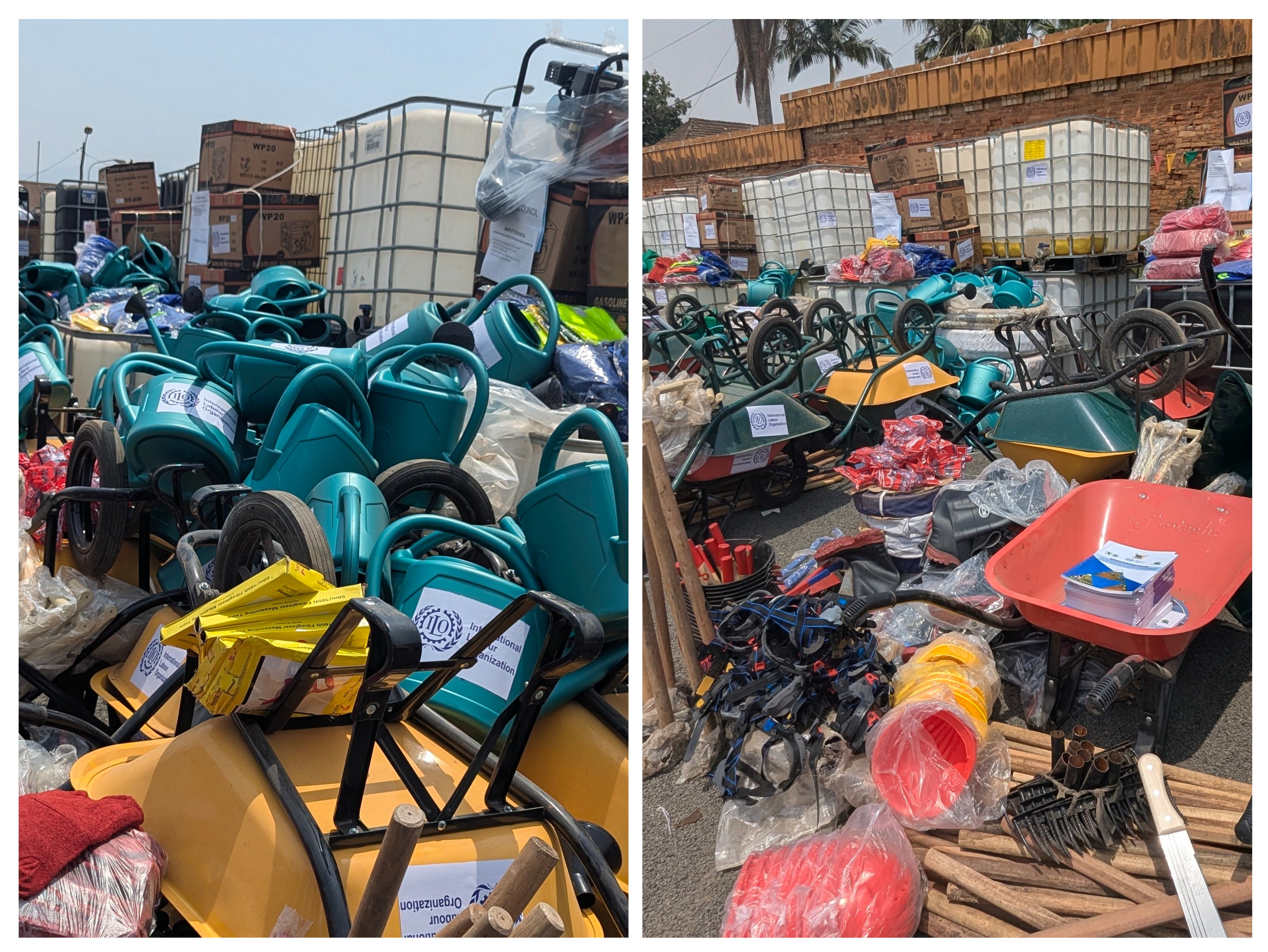
Wheelbarrows, Pickaxes, Shovels. These may look like ordinary things. But along the Ring Road, where one broken drain can cut off a whole village from the hospital for days, or where a bad stretch of road can make a farmer's potatoes rot before they reach the market these tools mean everything.They mean that communities can now take care of their own roads.
The Road That Holds a Region Together
The Ring Road is not just a road. It winds through the hills and valleys of North-West Region connecting towns, villages, and farms. It is the road that takes sick people to hospital, children to school, and farmers to market. Along its corridor, you will find cassava, maize, Irish potatoes, vegetables, and dairy farms all depending on that road to survive.
For many years, keeping this road in good shape has been a big problem. Local councils do not always have enough money or workers to repair it when it breaks. When a road deteriorates, everything suffers and People suffer.
That is what the Ministry of Public Works and the International Labour Organization (ILO ) decided to change.
Fixing Roads With Local Hands
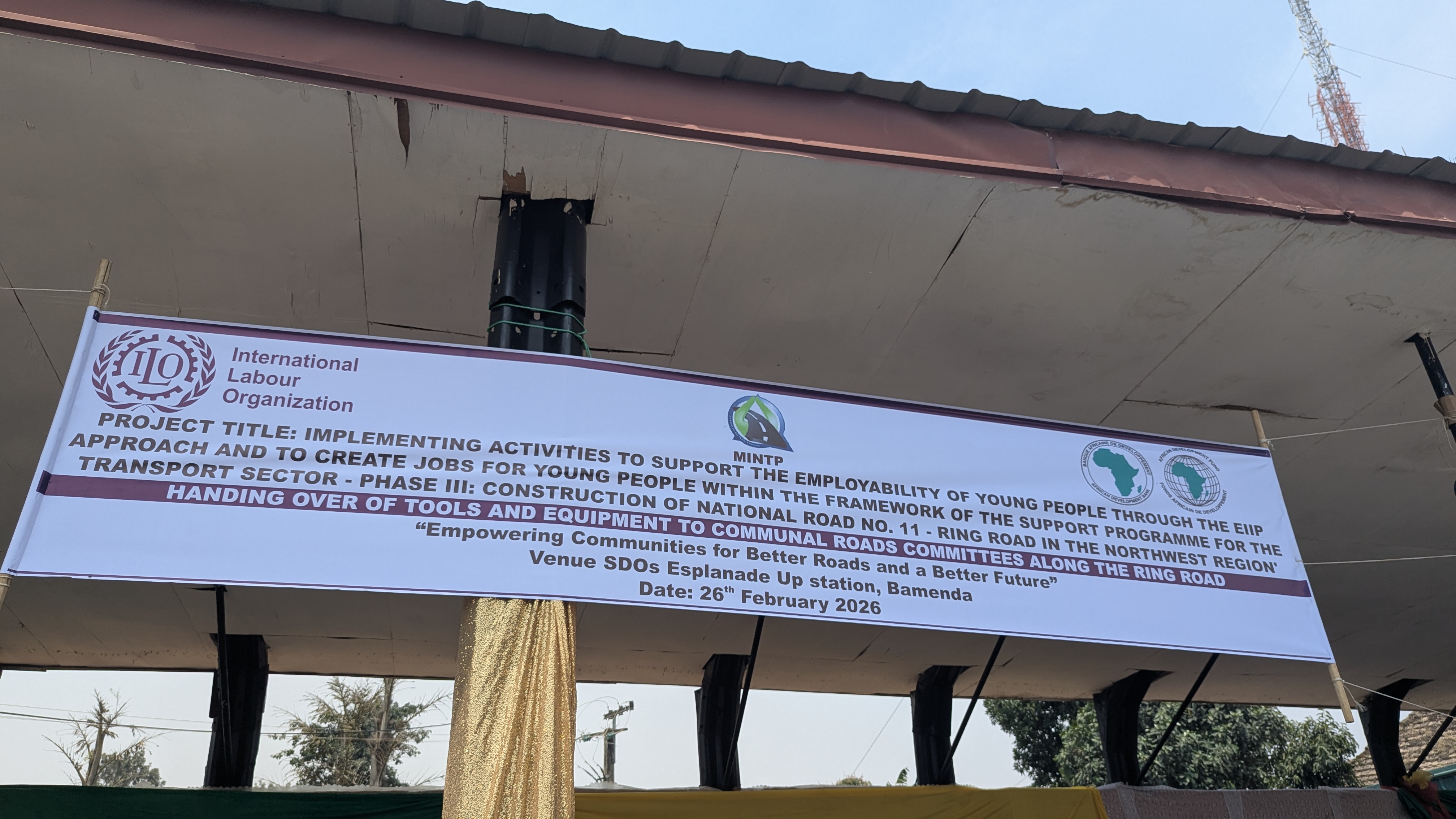
The two partners came up with an approach called High Labour-Intensive Methods, known by its French short form, HIMO. The idea is simple and smart. Instead of bringing in expensive machines from outside, you use the people who already live in the community. You hire local youth. You train them. You pay them. And together, they fix the roads around them.
"This is not just a technical approach"
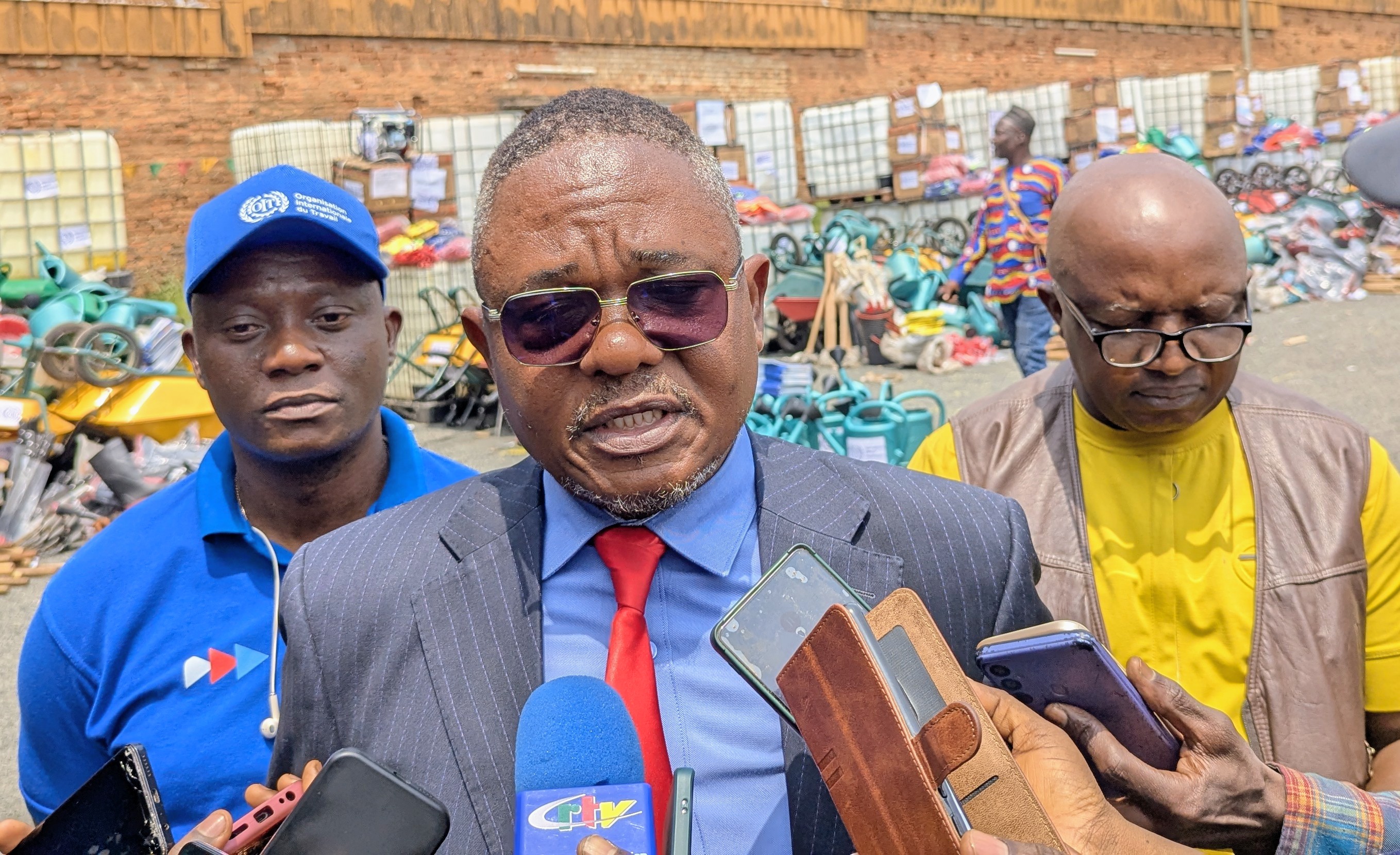
Nfor Cyprian Ngenge the Regional Delegate of Public Works for the North West told guests at Thursday's handover ceremony. "It is a powerful tool for social inclusion and economic development."
And the results are already showing. Young men and women across the region have learned how to maintain roads, clear drains, do earthworks, and handle basic road construction tasks. They did not just earn money they learned a trade.
A Committee in Every Council
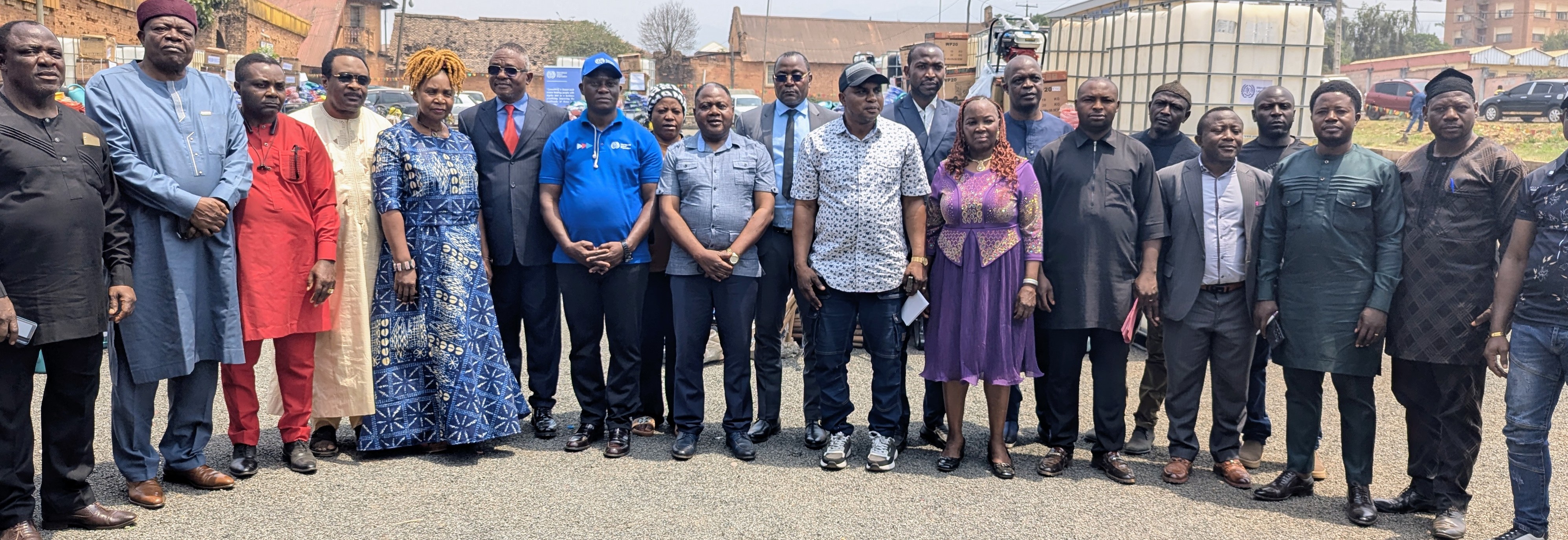
The biggest achievement of this partnership is the creation of 85 Communal Road Committees spread across 17 councils. These councils include Bamenda 2, Bamenda 3, Bafut, Tubah, Belo, Babessi, Ndop, Kumbo, Jakiri, Nkum, Benakuma, Wum, Akambe, Misaje, Ndu, Zhoa, and Fon Fuka.
Each committee is responsible for looking after the roads in their area. They clear blocked drains before the rains make them dangerous. They fill potholes before they become craters. They report damage early so that small problems do not become big expensive ones.For councils that are always struggling with limited budgets, these committees are a practical solution to a very old problem.
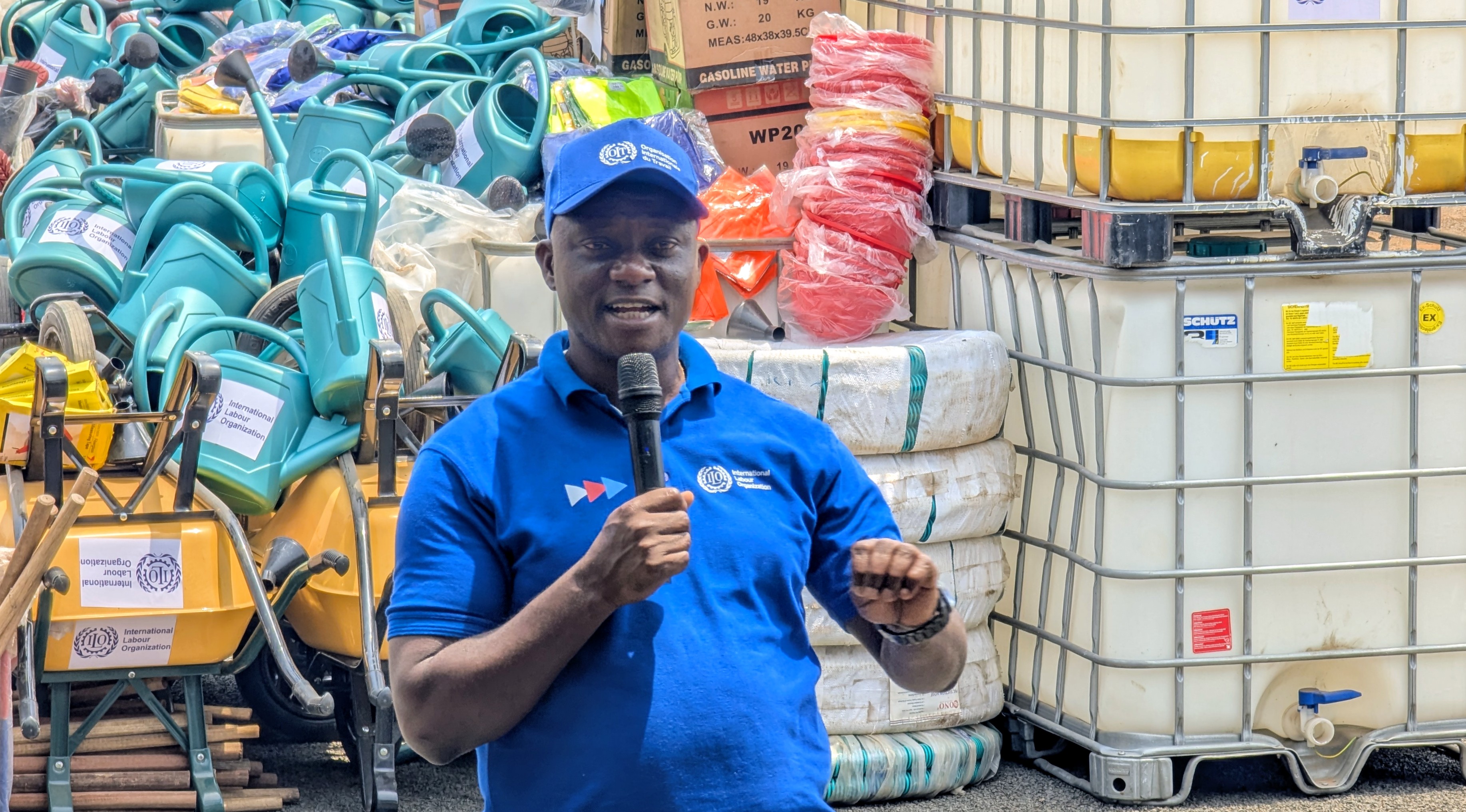
Etienne Tah Tayong, the National Project Coordinator for the ILO Ring Road Project, who spoke on behalf of the ILO Country Director at this ceremony, explained it clearly.
"Communities are not passive beneficiaries," he said. "They are active partners in managing the infrastructure that supports their daily lives."He also thanked the African Development Bank, whose financial support helped make the whole initiative possible alongside the ILO and the Cameroonian government.
"We Have Been Doing This Work, But Without Enough Tools"
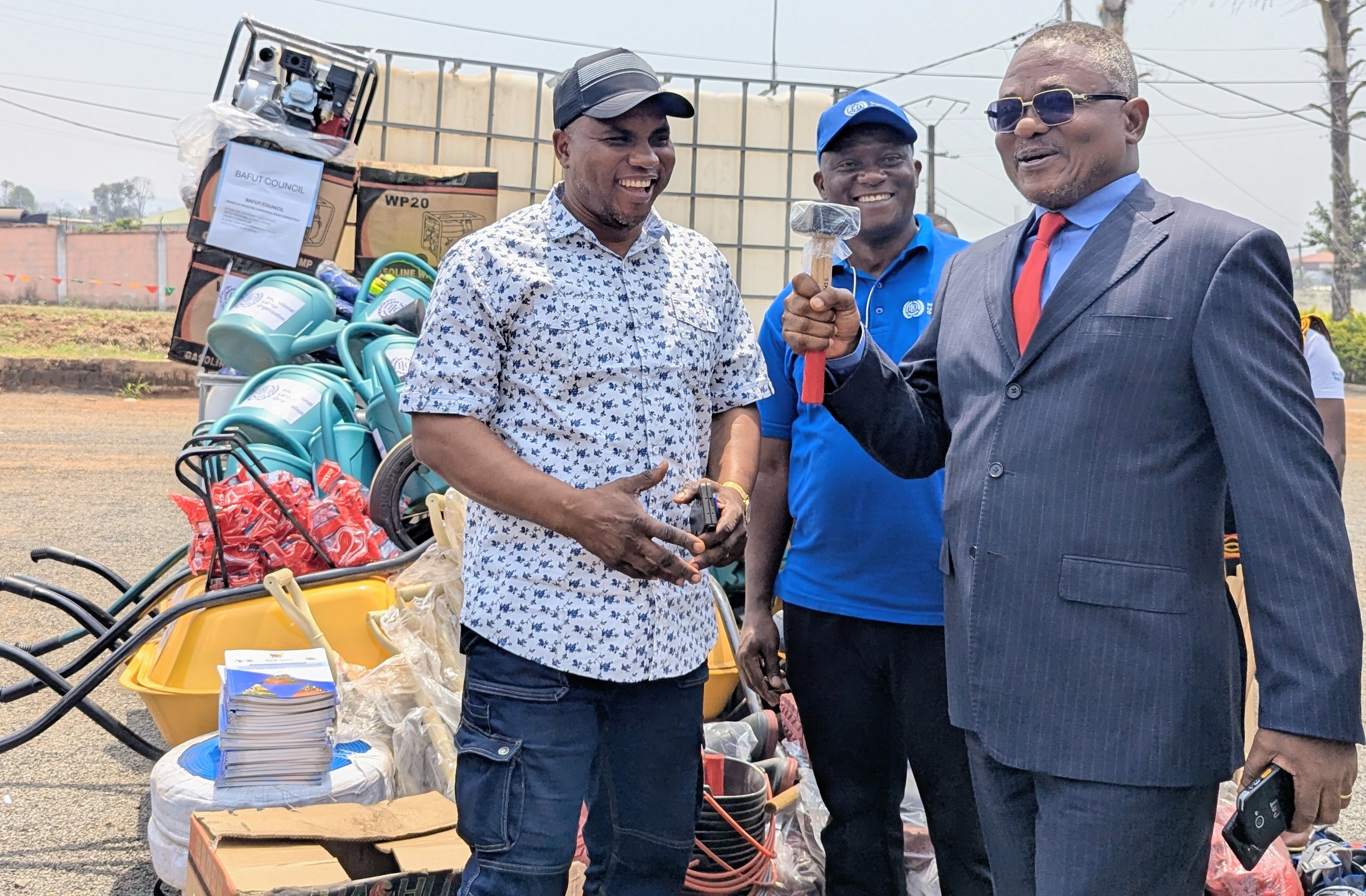
On the ground, the mayors who will oversee these committees are already thinking about what comes next.
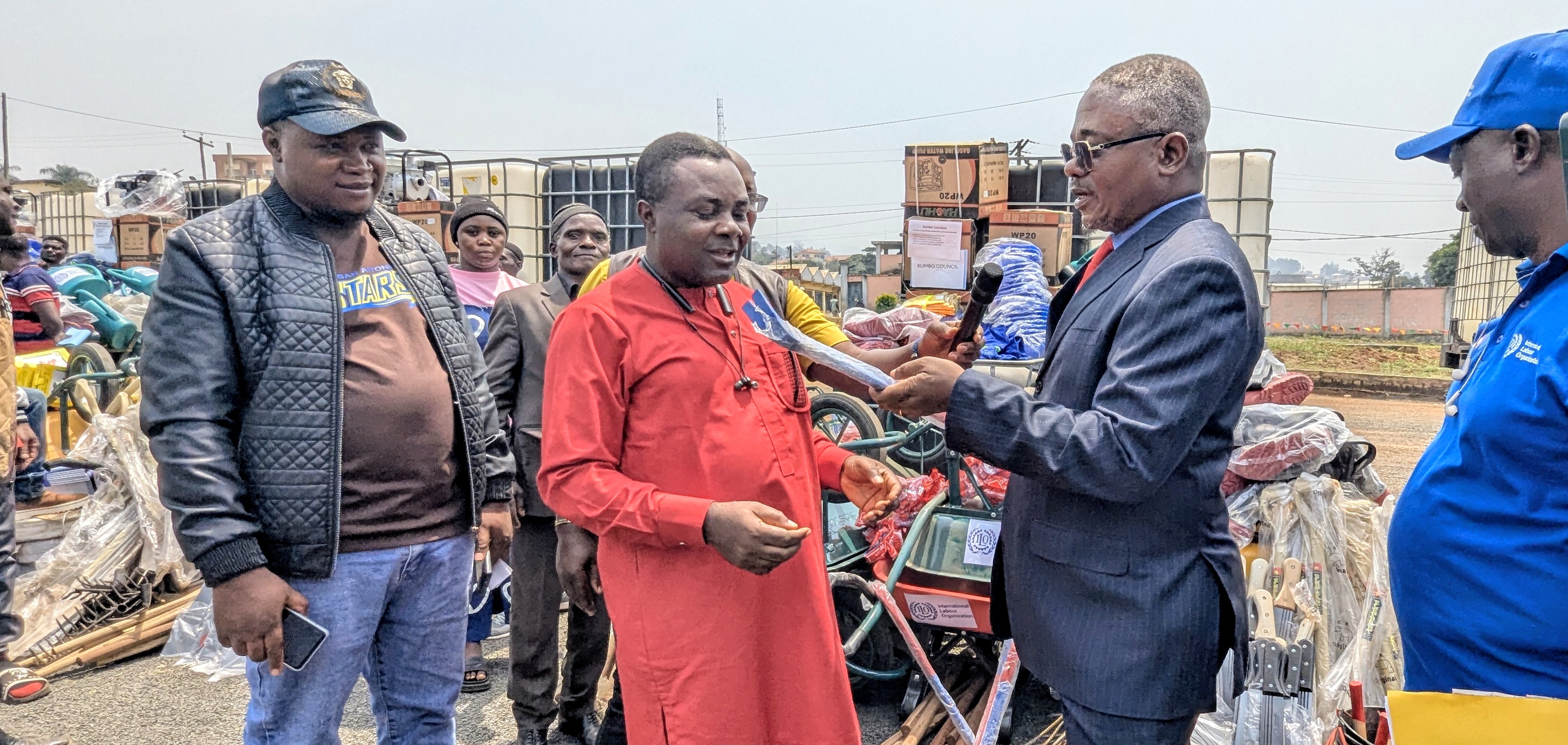
Dr Mborong Venasius Bongkiyung, the Mayor of Kumbo Council, did not hide his excitement or his honesty when he spoke after receiving his council's share of the equipment.
"The issue of road maintenance is a major preoccupation," he said. "Once roads are constructed, subsequently because of runoffs and other things which may be foreign to the road, the road tends to degrade."
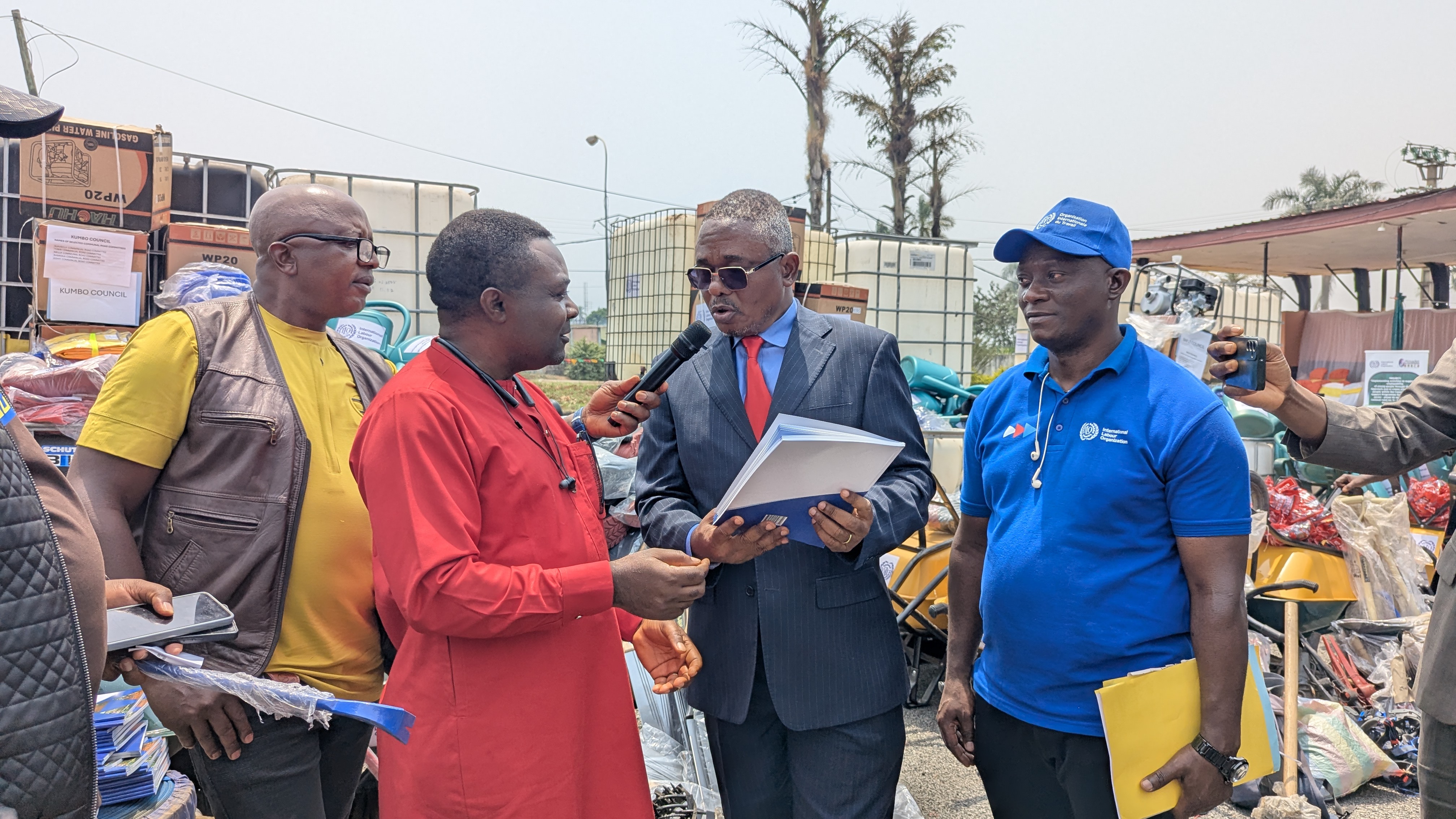
He explained that Kumbo Council has not been sitting idle. Maintenance work has been going on. But the problem has always been the same not enough tools to do the job properly.
"We have been doing road maintenance but without sufficient equipment," he admitted. "With these equipment now, I believe that a lot more can be done."
Dr Mborong was careful to be realistic too. The tools will not last forever, he noted, and more may eventually be needed. But for now, the focus is on using what they have wisely.
"We intend to use them judiciously," he said. "We intend to transport them to Kumbo and hold meetings on how to put them to active use."
It was the kind of straight talk you rarely hear at government ceremonies a mayor who is genuinely grateful, genuinely prepared, and genuinely aware of the work still ahead.
From Road Work to Farming Business
What makes this initiative even more exciting is where it could lead next.The Ring Road passes through some of the most productive farming land in Cameroon. Better roads mean farmers can get their goods to market faster and at lower cost. Less food is lost on the way. More money comes back to the village.Government officials are now encouraging communities to form cooperatives groups of people who work together to process and sell local produce. Think cassava flour. Packaged dairy products. Processed potato products. Things that last longer and sell for more money than raw farm produce.
The dream is a young person who learns road maintenance today and starts a food processing cooperative tomorrow. One skill building on another. That is the kind of development that does not stop when a project ends.
A Direct Message to Mayors
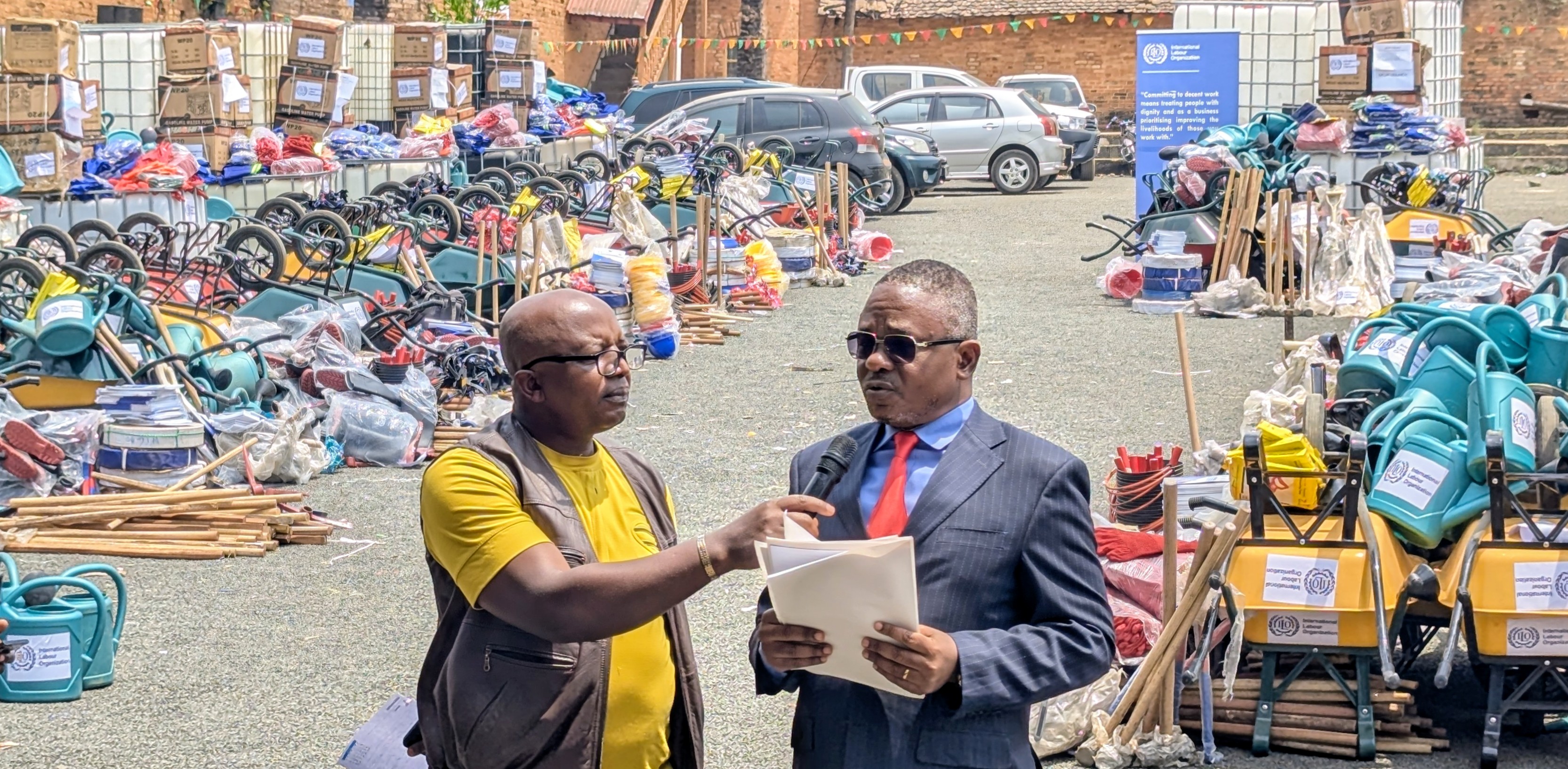
The Regional Delegate of Public Works did not mince words when he spoke to local council leaders at the ceremony.
"I wish to strongly encourage Mayors and local governments to make full use of the Communal Road Committees," he said firmly, adding that the government plans to keep expanding the programme until every council in the North West Region is included.It was a clear message. These committees have been set up. The tools have been given. Now it is up to local leaders to make sure they are used properly.
Given what Mayor Mborong said about his plans for Kumbo transporting the tools, calling meetings, and planning how to deploy them it appears at least some mayors are already taking that message seriously.
What a Wheelbarrow Can Mean
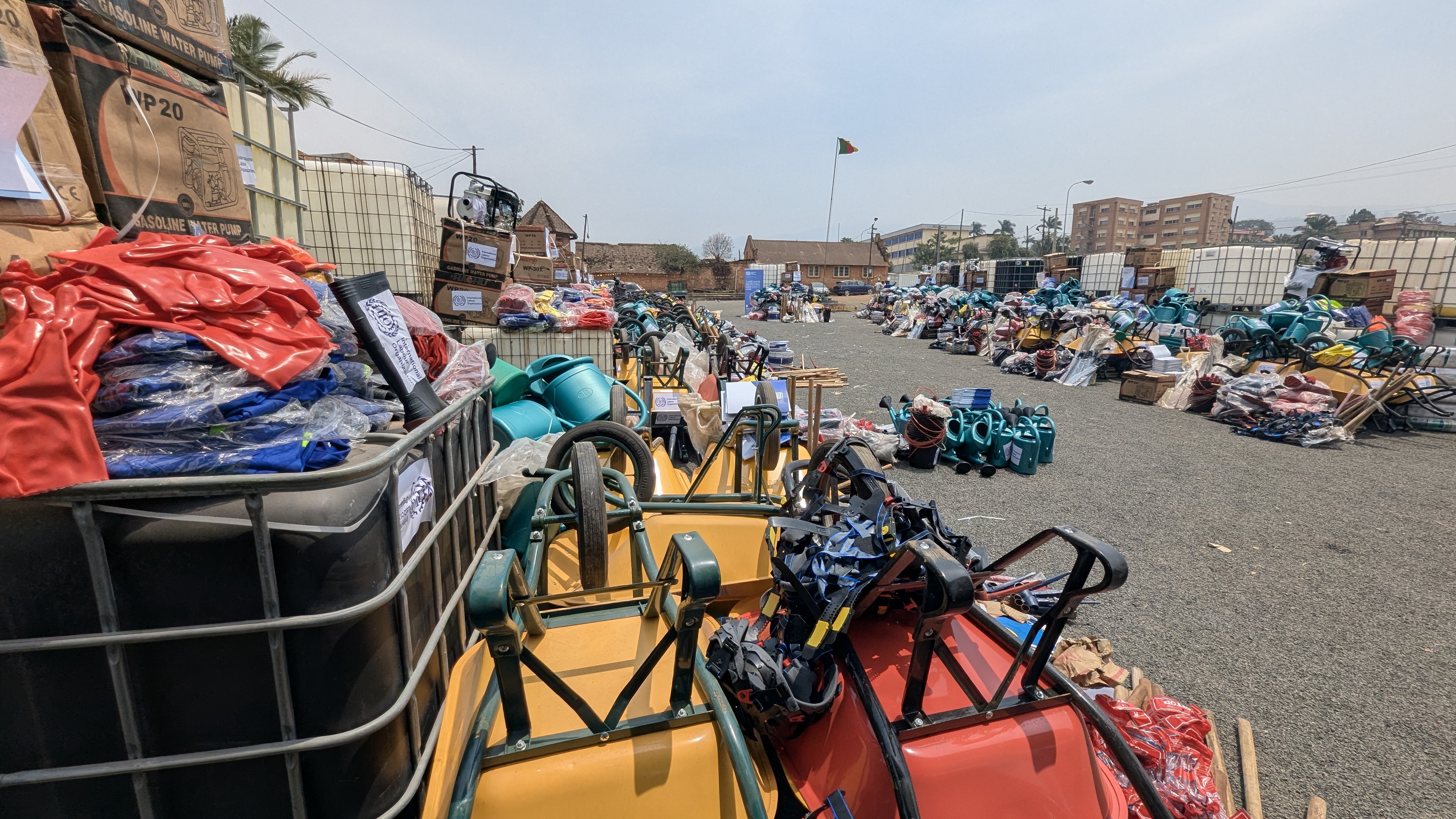
Big development projects often come with big speeches and big budgets. This one came with wheelbarrows.But do not be fooled by the simplicity of the tools.Ask the farmer in Ndop who can finally get her Irish potatoes to Bamenda market before they go bad. Ask the student in Babessi who no longer misses school because the road is blocked by mud after heavy rain. Ask the young man in Belo who spent the past year learning drainage work and now has a skill he can use for the rest of his life.
For these people, what happened on a quiet Thursday in Bamenda was not a small thing at all.It was a shovel. And the beginning of something they built with their own hands.
Reporting from North West Region, Cameroon.
Bamenjo Petronilla
+237 671870116