A Bag of Pepper, a Stack of Scales, and the Ghost of 2,300 Animals
The workshop smelled of sawdust and something older; animal, dry, faintly acrid. To a casual passerby in the busy market district of Yokadouma, it was just another carpentry business. Timber off-cuts leaned against the walls. Tools hung on iron nails. Bags of goods were stacked in the back, some marked as pepper.
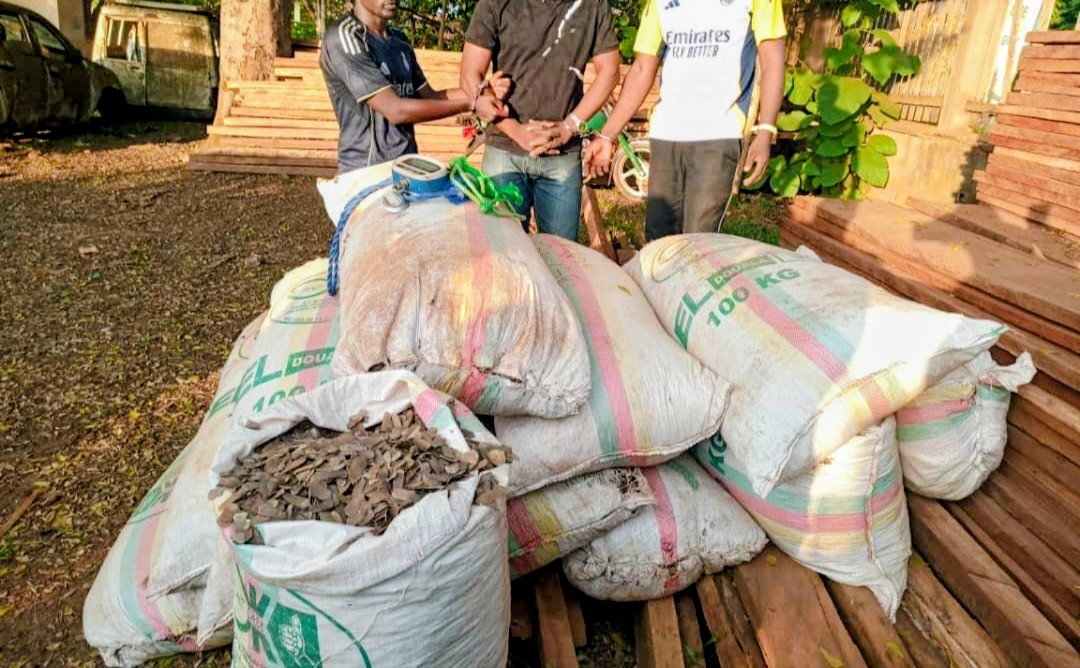
But when investigators from the Boumba and Ngoko Divisional Delegation of Forestry and Wildlife arrived backed by gendarmerie officers and the persistence of LAGA, Cameroon's wildlife law enforcement support body they found three men inside doing something that had nothing to do with woodwork. They were weighing bags. Carefully. Methodically.
Inside those bags were more than 700 kilograms of pangolin scales.
Dry, overlapping, comma-shaped. Keratin the same protein as your fingernails. Scientifically worthless for the medicinal purposes that drive demand for them across parts of Asia. Yet these scales are now among the most trafficked wildlife products on earth, turning the pangolin into the planet's most heavily poached mammal.
The arrest was the culmination of a long-running investigation. It was also, in its way, a reckoning not just with three men in a workshop, but with a network that reached far beyond Yokadouma's red-dirt streets.
Hidden in Plain Sight
The traffickers were specialists, not opportunists. According to sources with knowledge of the investigation who requested anonymity, the three men had spent considerable time collecting and stockpiling scales, building their cache slowly, deliberately. Their cover was the trade in non-timber forest products, an industry that moves through Yokadouma legitimately by the truck-load.
Among their concealment methods: hiding pangolin scales inside pepper bags. Pepper's sharp, volatile scent is capable of masking other odors a crude but effective counter to detection by smell.
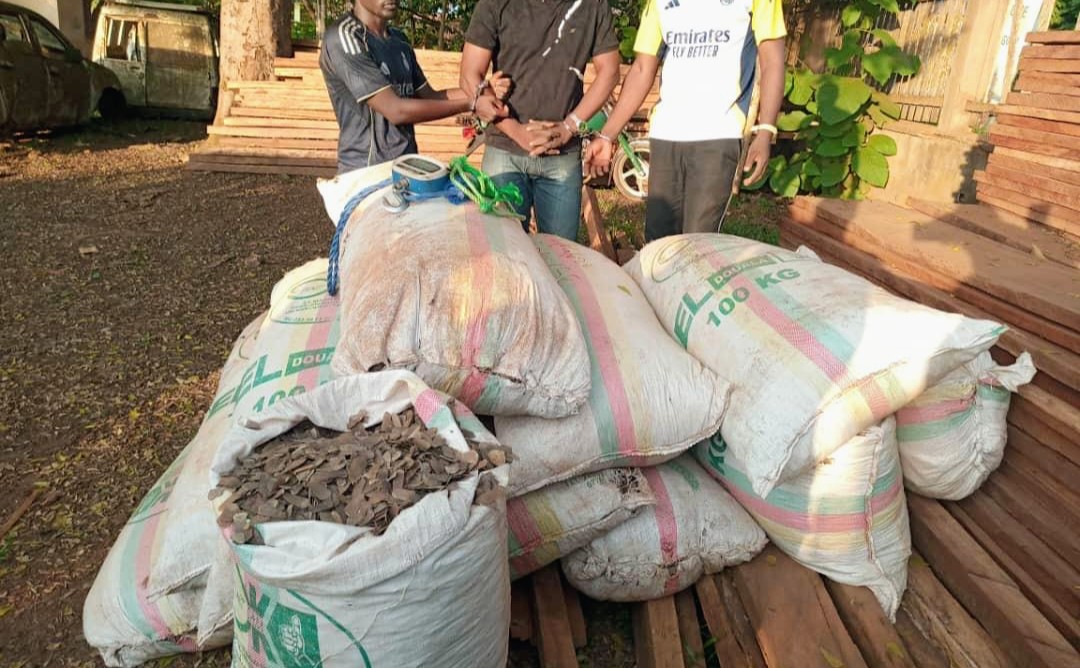
That the scales were being weighed when investigators arrived suggests the men were preparing a shipment. A few hours earlier or later, and 700 kilograms might have been gone dispersed across a network that, according to sources, extended through the Central African Republic, Gabon, Congo, and Equatorial Guinea, with routes leading to Yaoundé, Douala, and Bertoua.
The Weight of 2,300
Ofir Drori, director of LAGA, offered a figure that stops the breath: to produce 700 kilograms of scales, an estimated 2,300 pangolins would have had to die.
Each pangolin carries just a fraction of its body weight in scale. To reach 700 kilograms, the killing must have been sustained methodical and industrious slaughter, stretched over time and territory.
Pangolins are solitary, nocturnal, and slow to reproduce. A female gestates a single pup for five months. They survive by rolling into a perfect armored ball when threatened a defense that served them for 80 million years of evolution, and now works against them. A rolled pangolin can simply be picked up by hand.They do not scream. They do not bite. They curl up and wait.That passivity has made them almost heartbreakingly easy to kill. It has also made them a symbol of the defenceless thing that needs defending.
What the Law Says
Cameroon is home to three species: the white-bellied pangolin, the black-bellied pangolin, and the giant pangolin. All are fully protected. There are no exceptions, no permits, no gray areas. Under the 2024 wildlife law, possession or trafficking of pangolin scales carries a prison sentence of up to 20 years one of the continent's toughest legal frameworks for any wildlife crime.
Locally, pangolins are consumed as bushmeat. Internationally, their scales flow predominantly to China and Southeast Asia, where they are ground into traditional medicines despite no clinical evidence of efficacy.
Justice Waits in Yokadouma
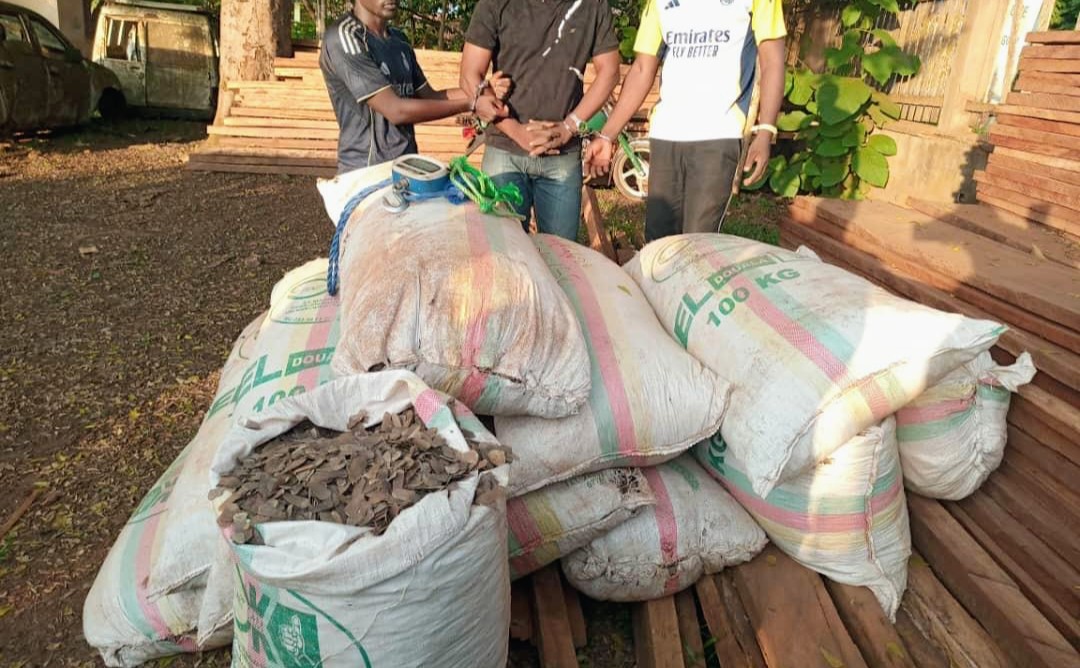
The three men remain in custody. Two motorcycles sit impounded. The scales are evidence now tagged, catalogued, bearing witness in the way that only objects can to what was done in the forests of Central Africa.
The Ministry of Forestry and Wildlife has condemned what it calls a massacre and reaffirmed its commitment alongside LAGA and partner organizations. These are the right words. But wildlife enforcement officers have heard right words before. What they watch for now is what happens in the courtroom whether the 2024 law is used to its full weight, or whether the sentences fall far short of its ambitions.
Because what was in those bags was not contraband in any abstract, bureaucratic sense. It was the remains of 2,300 creatures who had survived unchanged on this earth since before the dinosaurs disappeared curled up, waiting, in the forests of the Congo Basin.
The carpentry workshop in Yokadouma is quiet again. But somewhere in the deep forest if there are any left to hear it the question hangs in the dark: How many more before the killing stops?
By Bamenjo Petronilla
Source: LAGA